The Most Transforming Journey of a Lifetime

A Complete Guide
Parenthood is not an event. It is a transformation. The moment a child enters your life, your world does not just change — it expands, contracts, shatters and rebuilds itself, all at the same time. No book can fully prepare you for it, and no experience can ever replicate it. This guide is an honest, deep dive into what parenthood really is.
1. What is Parenthood, Really?
We often define parenthood as the state of being a parent. But biologically, socially, emotionally, it is so much more. It is a lifelong psychological contract you sign without reading the terms and conditions.
Parenthood begins long before birth. It begins in the mind — in the anticipation, the fear, the sudden awareness that your life is no longer just yours. For some, it is planned for years. For others, it arrives as a surprise that rewrites every plan.
At its core, parenthood is stewardship. You are not an owner of a child; you are a guardian of a soul. Your job is not to mold them into what you want them to be, but to provide the safest, most loving environment for them to become who they already are meant to be.
2. The Four Stages of Parenthood
Stage 1: The Survival Stage (0-2 Years)
This is the newborn fog. Sleepless nights, endless diapers, feeding every two hours, and a love so intense it physically hurts. Your identity disappears. You are no longer just you — you are “mama” or “papa.” In this stage, you learn unconditional love in its rawest form. The baby does nothing for you — no thank you, no conversation — and yet you would give your life for it in a second.
Stage 2: The Teaching Stage (2-12 Years)
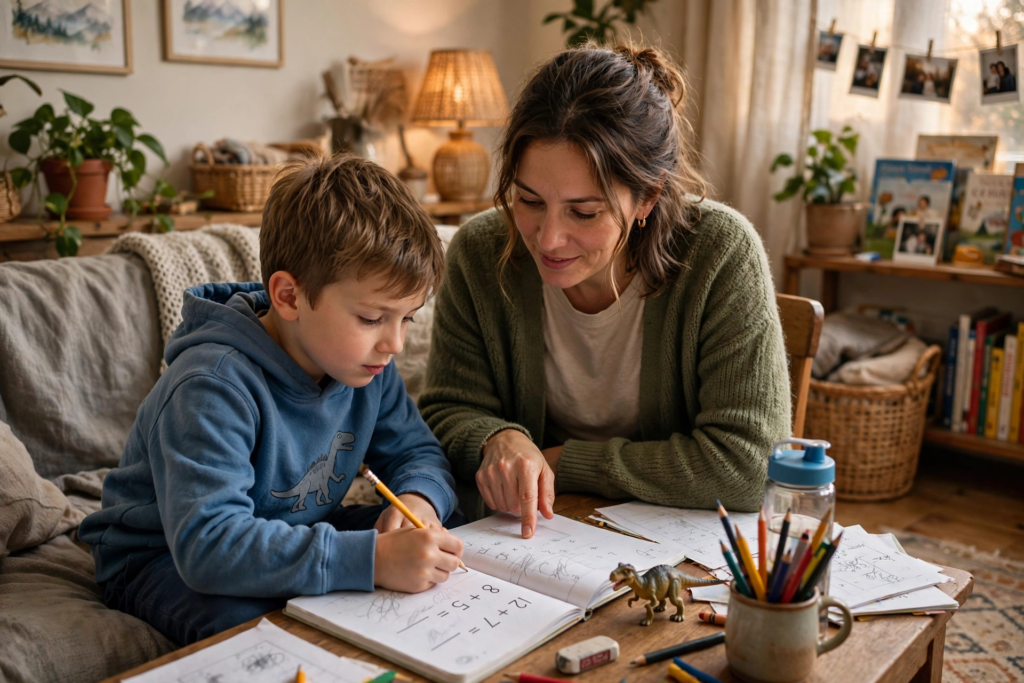
Now you are a guide, a teacher, a referee, a chef, a storyteller. The questions never stop: “Why is the sky blue? Where do people go when they die? Why can’t I eat chocolate for breakfast?” This is the golden age of parenthood. Your child believes you are a superhero who knows everything. You teach values not by lecturing, but by living. They watch how you treat the waiter, how you handle anger, how you apologize when you are wrong.
Stage 3: The Coaching Stage (13-18 Years)
Your child no longer needs a manager; they need a coach. This is the hardest transition for parents. You must step back while staying close. Teenagers push boundaries because it is their job to separate and become individuals. Your job is to keep the connection alive while letting them make mistakes. The phrase shifts from “Because I said so” to “What do you think you should do?”
Stage 4: The Friendship Stage (18+ Years)
One day, you look up and the child you taught to tie shoelaces is giving you advice on your phone. Parenthood comes full circle. You are no longer their world; you are a part of their world. And if you did it right, they come back — not because they need you, but because they want you.
3. The Emotional Reality No One Talks About
Social media shows us perfect parenthood: smiling babies, clean houses, matching outfits. Real parenthood is different.
a) The Guilt: You will feel guilty for working too much and for not working enough. For shouting and for being too lenient. For wanting 5 minutes alone. Parental guilt is universal. It means you care.
b) The Loneliness: Even surrounded by family, parenthood can feel incredibly lonely, especially for new mothers. Your old life, your old friends, your old freedom — they feel distant. It is normal to grieve your old life while deeply loving your new one. Both feelings can exist together.
c) The Identity Shift: Who am I now? Am I still me? Yes, but a more expanded version of you. You are still the person who loved music, travel, late nights — but now you have a new lens. Psychologists call this “matrescence” and “patrescence” — the developmental process of becoming a mother or father, just like adolescence.
d) The Unseen Mental Load: Parenthood is not just physical work. It is remembering vaccination dates, knowing which sock has a dinosaur, noticing that your child is quieter than usual today. This mental load is invisible but exhausting.
4. Types of Parenting Styles — What Science Says
- Authoritative (The Ideal): High love + High boundaries. You are warm but firm. You explain rules, listen to your child, and set clear expectations. Research shows children from authoritative homes have the best outcomes in confidence, academic success, and emotional health.
- Authoritarian: High control + Low warmth. “Because I said so.” Obedient children, but often anxious and low self-esteem.
- Permissive: High warmth + Low boundaries. You are your child’s friend, not parent. Children may struggle with self-regulation.
- Uninvolved: Low warmth + Low control. The most damaging style.
The goal is not to be a perfect parent from a book, but to be a responsive parent. 70% good enough parenting is actually perfect parenting.

5. Motherhood vs Fatherhood — Same Love, Different Expressions
Motherhood is often portrayed as instinctive, fatherhood as learned. That is outdated.
Modern neuroscience shows that both mothers and fathers undergo brain changes after a child is born. Oxytocin, the love hormone, floods both parents. Mothers may experience more physical connection initially due to pregnancy and breastfeeding, but fathers form equally deep attachment through play, caregiving, and presence.
A mother often becomes the child’s safe haven. A father often becomes the secure base from which to explore. A child needs both energies, regardless of gender — the nurturing and the encouraging, the holding and the letting go.
6. Parenthood in 2026 — The New Challenges
Parenting today is not what it was 20 years ago.
- Screen Time: How much is too much? The American Academy of Pediatrics says co-viewing and quality over quantity. The battle is real.
- Information Overload: Your parents had one book. You have 10,000 Instagram experts telling you 10,000 different things. Trust your pediatrician and your instinct more than the algorithm.
- Work-Life Balance: The pressure to be an ideal employee and an ideal parent simultaneously is crushing. The truth: balance is a myth. There are only trade-offs and seasons.
- Mental Health: We finally talk about postpartum depression, postpartum anxiety, and paternal postpartum depression. If you feel persistent sadness, rage, or disconnection after becoming a parent — it is not your fault. Seek help. It is a medical condition, not a failure.
7. 20 Practical Rules That Actually Work
- Connection before correction. Always.
- Never discipline when you are angry.
- Say “yes” more than “no” when you can.
- Apologize to your child. It teaches them accountability.
- Create rituals, not just routines. Pancake Sunday is a ritual.
- Listen to their big feelings without fixing them immediately.
- Put your phone down for 20 minutes of undistracted play. It changes everything.
- Take care of your marriage/partnership. Children feel security when your relationship is secure.
- Let them be bored. Boredom breeds creativity.
- Read to them every single night. It is the #1 predictor of academic success.
- Let them do risky play — climbing, jumping. It builds resilience.
- Don’t compare your child to others, or your parenting to others.
- Sleep train if you need to. A rested parent is a better parent.
- Feed them, but don’t force them. The division of responsibility: you decide what, when, where. They decide if and how much.
- Teach gratitude by practicing it out loud.
- Keep your promises, small and big.
- Allow them to see you fail and try again.
- Your home doesn’t need to be Instagram-clean. It needs to be safe and warm.
- Hug them every day — 8 hugs a day is a good goal.
- Remember: you won’t remember the days you had the perfect laundry, but you will remember the days you danced in the kitchen.
8. The Legacy of Parenthood
In the end, parenthood is not about raising perfect children. It is about raising good humans who will leave this world a little better than they found it. It is about the invisible threads of values, stories, and love that you pass on.
Your child will not remember every toy you bought. They will remember how you made them feel — safe, seen, heard, and deeply loved.
One day, they will have their own children, and in a quiet moment at 3 AM while holding their own crying baby, they will finally understand everything you did. And they will call you.
Parenthood is hard. It is holy. It is the hardest, holiest work you will ever do. And it is worth every single second.