The Quiet Strength That Shapes a Lifetime
Introduction: Fatherhood Is Not a Role, It’s a Rewriting
A man becomes a father in a moment. He becomes a dad over a lifetime.
When a father holds his newborn skin-to-skin for the first time — that tiny hand on his chest, eyes closed, trusting completely — something rewires in his brain. Testosterone drops, oxytocin surges, and his brain’s empathy circuits light up. Science calls it “father brain.” We call it love that changes everything.
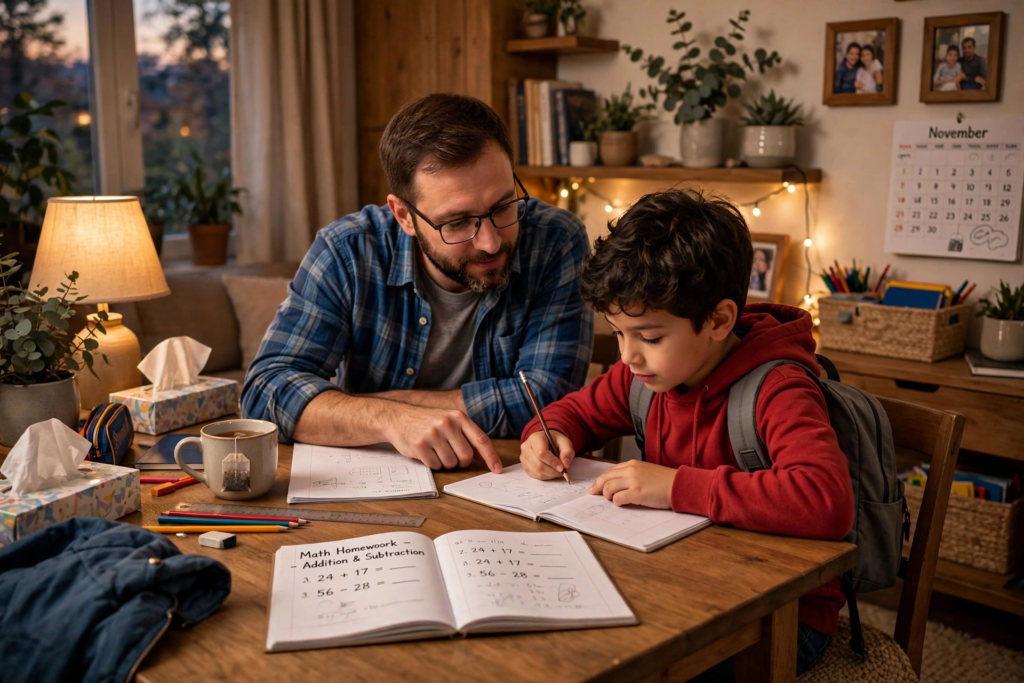
For years, society told fathers: earn, protect, don’t cry. The modern father of 2026 is rewriting that script. He is present at delivery, does night feeds, braids hair, teaches football, and also teaches his daughter to say “no.” Fatherhood today is not about being the provider only; it is about being present.
A father is a child’s first superhero, first rule-setter, first coach, and often, the first heartbreak and first hero again.
1. The 4 Stages of Fatherhood
Stage 1: The Protector (0-4 Years)
This is the skin-to-skin image. The newborn father. You are a giant to this tiny human. Your job is safety, warmth, and presence. Research shows babies with involved fathers from birth have better cognitive development and lower anxiety. You don’t need to be perfect — just be there. Change diapers, sing badly, hold them while they cry. That is fatherhood.
Stage 2: The Playmate (4-12 Years)
This is the sunset football image — father and son laughing, ball in the air. Fathers often bond through play, not just words. Rough-and-tumble play, cricket in the gali, cycling, wrestling on the bed — this is how fathers teach emotional regulation. When dad says, “It’s okay, you lost, try again,” the child learns resilience.
Fathers who play daily for just 20 minutes have children with higher emotional intelligence.
Stage 3: The Guide (13-18 Years)
The driving lesson image captures this perfectly. Teenage fatherhood is no longer about control, but about guidance. Your daughter is now driving the car — literally and metaphorically. Your hands are not on the wheel, but you are in the passenger seat, giving calm directions.
This is the hardest stage. Your child will push you away, argue, and say “You don’t understand.” Your job is to stay calm, keep the door open, and teach values by living them, not lecturing. A father who listens more than lectures raises a teenager who comes home.
Stage 4: The Friend (18+ Years)
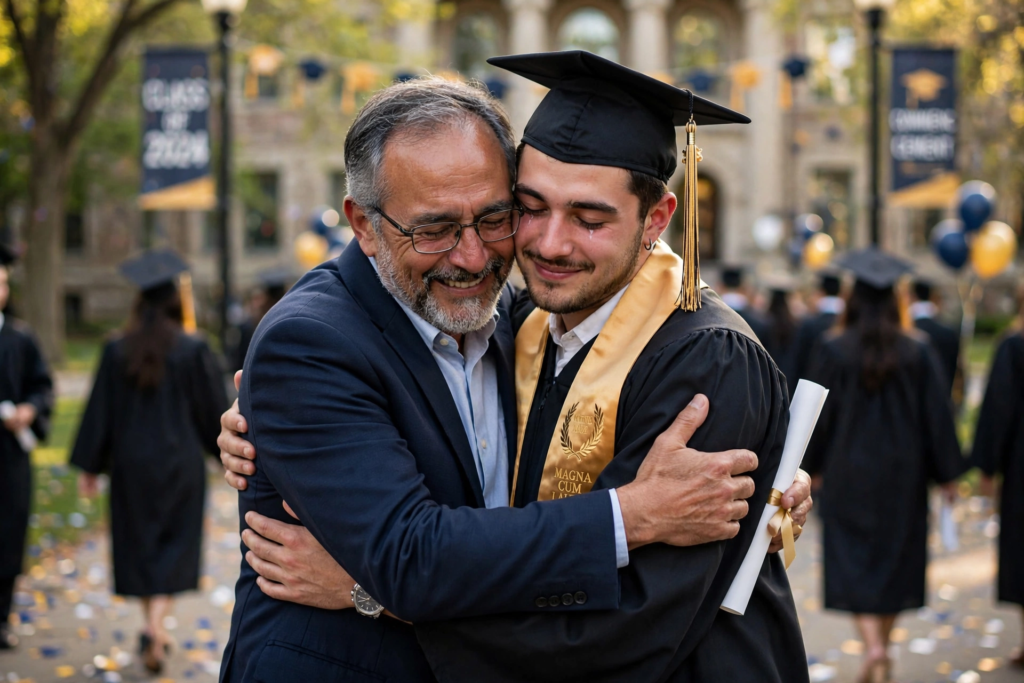
One day your son calls you not for money, but for advice about his own son. Your daughter calls you not because she needs permission, but because she values your opinion. You transition from authority to advisor. If you did it right, your child doesn’t leave you — they bring you with them.
2. Why Fatherhood Matters: What Data Says
- Children with involved fathers are 40% less likely to have behavioral issues in school.
- Daughters with supportive fathers have higher self-esteem and are 75% less likely to have teenage pregnancy.
- Sons with present fathers are better at managing anger and have healthier relationships as adults.
- Fathers themselves live longer, are happier, and have lower rates of depression when actively involved in parenting.
Fatherhood doesn’t just shape the child. It shapes the man.
3. The New Challenges of Fatherhood in 2026
a) The Provider vs Presence Conflict: Modern dads want to be present, but work pressure is higher than ever. The guilt of missing a school function because of a meeting is real.
b) No Role Model: Many men grew up with distant, authoritarian fathers who never said “I love you.” They want to be different, but have no map. They are learning on the job.
c) Mental Health: 1 in 10 fathers suffer from paternal postpartum depression, but no one talks about it. Anger, irritability, withdrawal after a baby’s birth is not laziness — it can be depression.
d) Co-Parenting, Not Helping: The old language was “I help my wife with kids.” The new language is “We parent together.” Fatherhood is not help. It is responsibility.
4. The Fatherhood Code – 7 Rules Real Dads Live By
- Presence over presents. Your time > your money.
- Be the man you want your son to become and your daughter to marry.
- Apologize to your kids. “Sorry, papa was wrong” teaches more than a 1-hour lecture.
- Discipline with calm, not anger. Rules without relationship = rebellion.
- Teach them to lose. Let them lose in football, in Ludo, in life — and then teach them to try again.
- Protect their mother. How you treat their mother is how your sons will treat women and how your daughters will expect to be treated.
- Say “I love you” and “I am proud of you” often. Boys especially rarely hear this from fathers, and they crave it.

TABLE 1: Old Fatherhood vs New Fatherhood
| Aspect | Old Fatherhood (Before 2010) | New Fatherhood (2026) |
| Main Role | Breadwinner, disciplinarian, distant authority | Co-parent, nurturer, emotional anchor, guide |
| Emotion | “Men don’t cry,” hides feelings, tough love | Expresses love openly, talks about feelings, cries with kids |
| Time With Kids | Weekends, evening, mostly mother handles daily care | Daily involvement: feeding, homework, bedtime stories, school runs |
| Discipline Style | Authoritarian: “Because I said so” | Authoritative: Explains rules, listens, sets boundaries with love |
| Impact on Child | Respected but feared, emotional distance | Respected and trusted, secure attachment, open communication |
TABLE 2: What Children Need From Father at Each Age
| Age of Child | Child’s Silent Need | What Father Should Do | What to Avoid |
| 0-5 Years | “Are you there? Am I safe?” | Skin-to-skin, play on floor, daily 20-min distraction-free play | Being on phone while with child, shouting, being absent |
| 6-12 Years | “Do you see me? Am I capable?” | Attend games, help with projects (don’t do it for them), teach skills | Mocking, comparing with other kids, only focusing on marks |
| 13-18 Years | “Do you trust me? Will you listen without judging?” | Driving lessons, listening without fixing, respecting privacy, being calm | Moral policing, invading phone, saying “In my time…”, anger lectures |
| 18+ Years | “Do you respect me as an adult?” | Ask advice from them, be a friend, support their decisions | Controlling career/marriage choices, emotional blackmail |
5. Father and Daughter, Father and Son – Different, But Same Love
A father is a daughter’s first love and a son’s first hero.
For a daughter, her father teaches her what to expect from men. If he respects her opinions, listens, and values her strength, she will never settle for less. The driving lesson is symbolic — a father teaching his daughter to take control of the wheel of her own life.
For a son, his father teaches him what it means to be a man. Not by being macho, but by being kind, accountable, and brave enough to be gentle. The football game in the park is not about football. It’s about: “I am here, I am playing with you, you matter more than my work.”
Conclusion: The Legacy
One day, your child will not remember the expensive toys, the big house, or the brand of shoes you bought. They will remember that you were there — holding them as a newborn, running with them at sunset, sitting beside them while they learned to drive, nervous and proud.
Fatherhood is not about being perfect. It is about being present. It is about showing up when it is boring, when you are tired, when no one is clapping.
A good father leaves a legacy not in property, but in the secure, confident, kind human his child becomes.
If you are a father reading this — call your child today. Play for 20 minutes. Say “I love you.” That one act will matter more than any article.